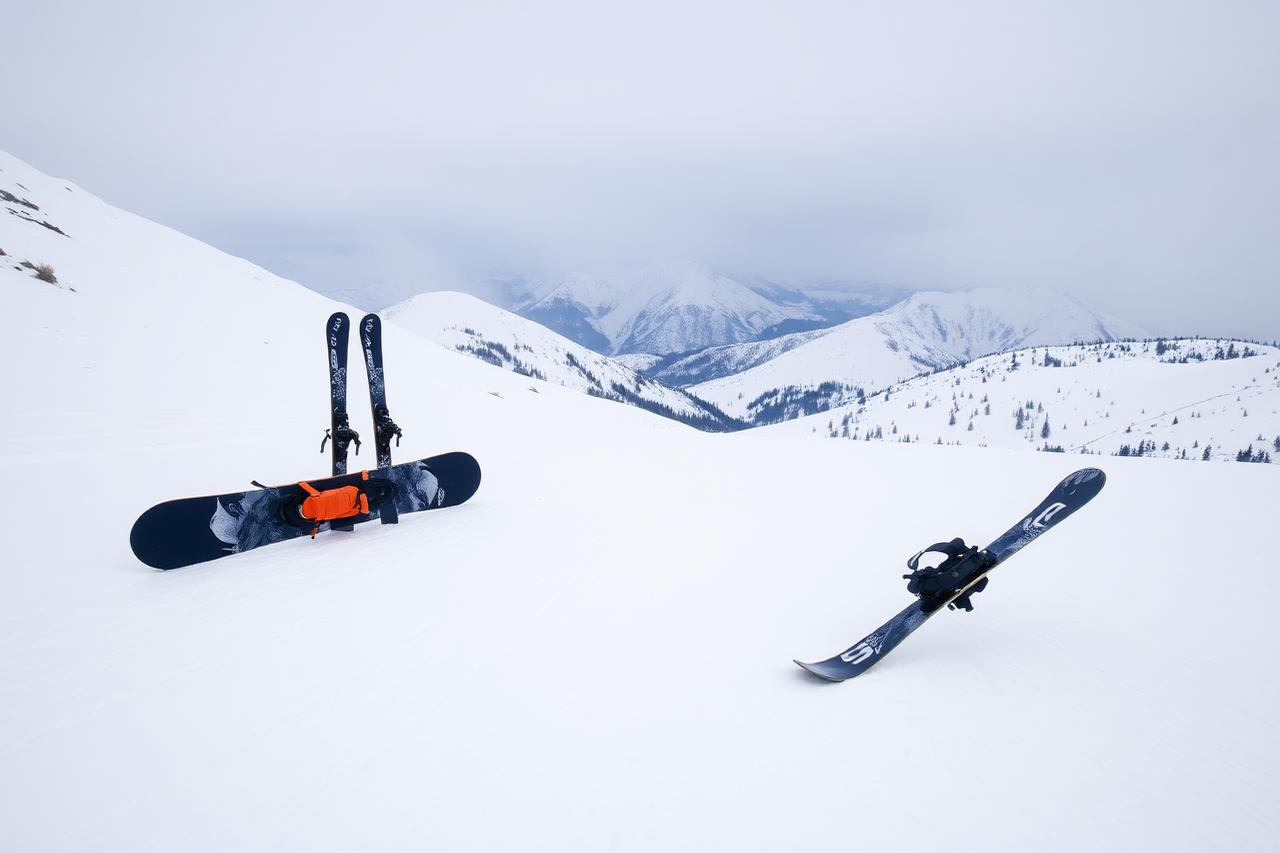
There is no single answer
In our family both disciplines coexist: Fernando and Eduardo snowboard, Lorena and Lívia ski. Nobody had to convince anyone.
This text does not say which one is better. It organises the criteria that usually decide the choice for someone who has never been on snow: age, learning curve, cost, physical demand and the shape of the trip.
Learning curve by age
What we observed with our own children, and what instructors explained to us at the schools where we took lessons:
- Up to age 5 or 6: schools usually accept ski only. Eduardo started skiing at 3 and moved to snowboard at 5.
- Between 7 and 12: both are possible, and the child often decides based on what friends or siblings are doing.
- Teenagers and adults: snowboarding tends to have harder first days and more frequent falls; skiing usually gives a feeling of control sooner.
- Adults over 40 with little balance-sport background: snowboard falls, especially on the tailbone and wrists, weigh more in the decision.
There is no maximum age. What changes is the adaptation time and tolerance to falls — which is why a private lesson on day one is usually worth more than any new piece of gear.
What usually weighs on the decision
- Skiing separates the legs and often gives a feeling of control sooner.
- Snowboarding has both feet fixed and asks for a different balance logic.
- People who skate or surf sometimes relate more to snowboarding.
- Groups with small children often find skiing easier to supervise.
Cost and gear at the start
On a first trip the dominant cost is not the on-slope equipment: it is lessons, lift pass and lodging. Board, skis, boots and helmet can be rented at the destination, and that is what we recommend for beginners in either discipline.
What is worth buying before travelling is the clothing that touches your body — base layer, socks, gloves and neckwear — because rentals rarely cover those items well.
- Ski and snowboard rentals cost similar amounts at most resorts.
- Snowboarding uses a softer boot and is usually more comfortable to walk in off the slope.
- Skiing means handling two skis and two poles, which is slightly more awkward in transport and lift lines.
- A helmet is a safety item in both disciplines, not an optional accessory.
Physical demand and falls
Both sports demand legs and core. The practical difference is where fatigue and falls show up.
Ski
- Fatigue concentrated in thighs and knees.
- Falls are usually sideways, while moving.
- It is easier to stop and stand still on a flat area.
Snowboard
- Fatigue concentrated in hips, thighs and calves in the first days.
- Tailbone and wrist falls are common while learning — wrist guards help.
- Getting up from the ground repeatedly is more tiring than the descent itself.
Families with different disciplines
It works. What helps is agreeing on meeting points on the mountain, accepting different paces and not turning the choice into a competition.
In practice we split the morning between separate lessons and keep the afternoon for easy runs everyone can do together.
Deciding in three questions
- How many snow days does the trip have? With two or three days, skiing usually keeps an adult beginner on their feet longer.
- Who is travelling together? Small children and complete beginners tend to follow each other better on skis.
- Is the goal to enjoy this trip or to start a sport? Someone who wants to keep practising can accept snowboarding's harder first days.
Learning curve: the first days
On skis the feet are independent and the position resembles walking or cycling: a beginner can usually get down an easy slope in a wedge (the classic 'pizza') on day one. What takes longer is the next step, parallel turns with the skis together.
Snowboard is the opposite. Both feet are strapped to one board, the body faces sideways and the first days involve frequent falls, almost always onto the seat or the hands. Once that phase is over, many people progress quickly to linked turns.
A rule of thumb instructors use: skiing is easier to start and harder to master; snowboarding is harder to start and, past the first step, more straightforward to progress.
| Criterion | Ski | Snowboard |
|---|---|---|
| First day | Usually gets down an easy slope in a wedge | Mostly falling and standing back up |
| Typical falls | Knee twists, sideways tumbles | Impact on tailbone, wrists and head |
| Usual minimum lesson age | From 3–4 years old | Generally from 7–8 years old |
| Flat ground and lift queues | Easy, using poles | Requires unstrapping one foot and skating |
| Progress after 3 days | Controlled wedge turns | Linked turns for many students |
Frequently asked questions
Is it easier to learn ski or snowboard?
For most adult beginners, skiing gives a sense of control sooner, still in the first days. Snowboarding usually has a harder start and faster progress once you learn to switch edges. It is not a rule: it depends on balance, fitness and patience with falls.
At what age can a child start?
Many schools accept ski from age 3 and snowboard from age 5 or 6. Eduardo started skiing at 3 and moved to snowboard at 5. Confirm the minimum age with the school at your destination before booking, because the policy changes from resort to resort.
Do I need to buy equipment on the first trip?
No. Board, skis, boots, poles and helmet are worth renting at the destination. What is worth buying beforehand is the clothing next to your skin: base layer, thermal socks, gloves and neckwear.
Is a private or group lesson worth it?
On our trips, a private lesson on day one is what sped up adaptation the most, especially with children. Group lessons cost less and work well from the second or third day, once the basics are in place.
Can you switch discipline mid-trip?
Yes, and rental shops usually allow an equipment swap for the difference in the daily rate. The caveat is time: switching in the middle of a short trip means restarting the learning curve.
Terms in this guide
Technical vocabulary used above, linked straight to the full definition in the snow glossary.
- Base layer
- The piece in direct contact with the skin. Its main job is not warmth but moving sweat away from the body. Usual materials: merino wool and technical synthetics. Cotton is discouraged because it holds moisture.
- Snowplough (pizza)
- A “V” position with the ski tips together, used by beginners to control speed and stop. It is the first technique taught in most schools.
- Parallel skiing
- Skiing with both skis aligned, controlling speed through the shape of the turn rather than the wedge. It marks the move from beginner to intermediate.
- Poles
- Used in skiing to set the rhythm of turns and help balance on flat ground. They are not used in snowboarding.
- Switch
- Riding with the opposite foot forward, reversing your natural stance. Practising switch improves balance and is a prerequisite for tricks.
- Lift pass
- The ticket giving access to the lifts. It is usually cheaper bought in advance and in multi-day packages.